Klarify
Sep '24 - Sep '25
I joined Klarify in late 2024 as the sole designer on a rapidly scaling mental health AI platform. Over the course of a year, I designed every user-facing screen, established comprehensive brand guidelines, overhauled marketing materials, and built a scalable design system. Working directly with the founders and engineering team, I tackled the challenge of introducing AI to a more tech-resistant audience, while trying to maintain clarity and simplicity across complex therapeutic workflows.
Overview
Brand & Web Design
The Challenge
Klarify needed a web presence that could effectively communicate its expanding feature set, while navigating a unique tension: positioning itself as an AI company in a field where many therapists were skeptical of the technology.
Website V1 — Finding Identity
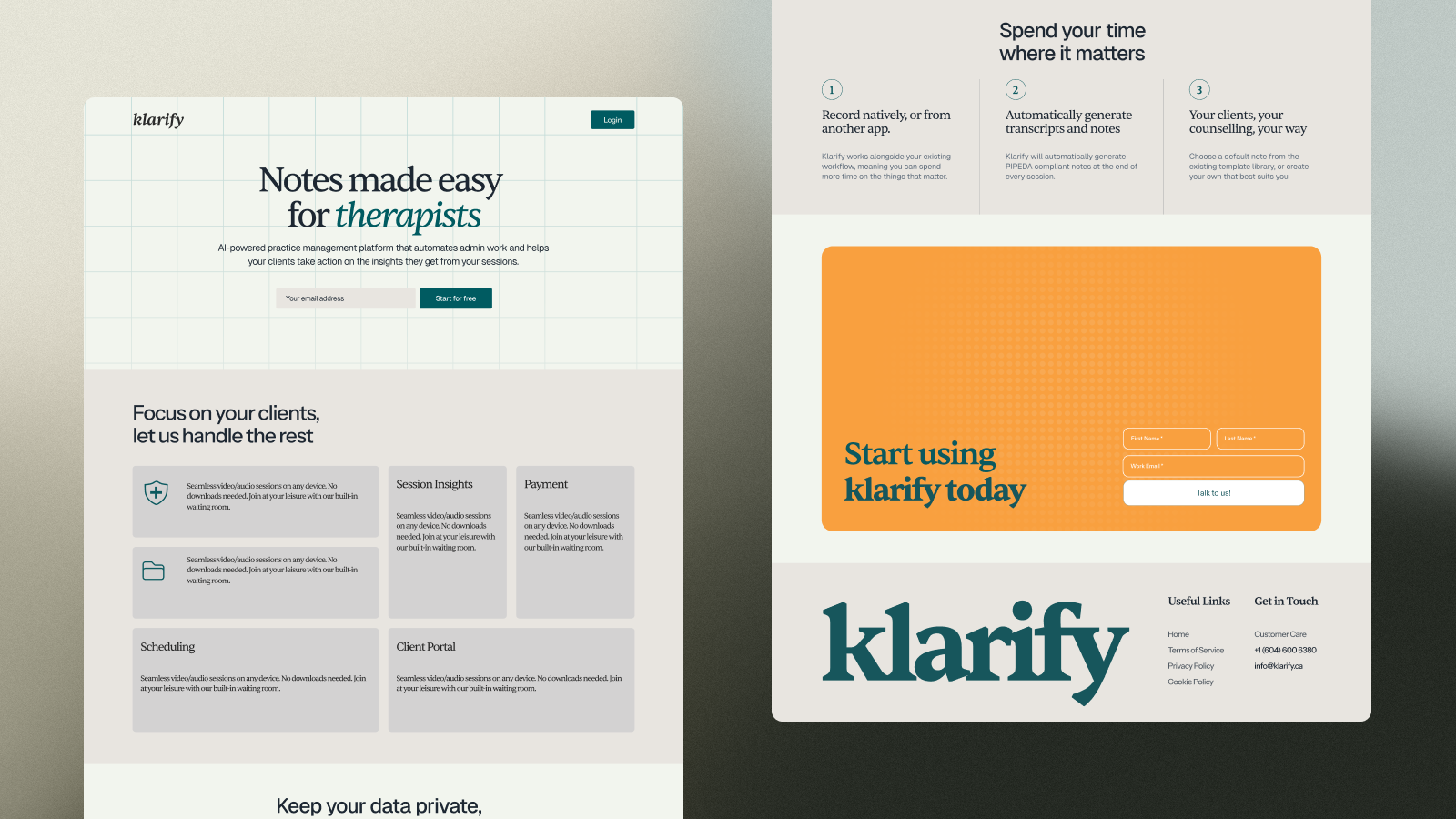
The company was in a transitional phase, where it was still defining its identity. I led a website redesign to focus on communicating the value proposition as clearly as possible, while simultaneously trying to understand the core audience. Through multiple iterations, we tested different sections and styles to find the right balance of showcasing AI capabilities, without alienating traditional practitioners.
Once the design was finalized, I built and shipped the site in Framer.
Website V2 — Current Version
In late 2025, I led a second iteration that refined the brand further, and had a more concrete style defined. View the current site here.
Marketing & Brand Assets
As the brand evolved, I designed all public-facing materials to establish a cohesive visual language:
Digital Advertising
Some of the work I did on this front included:
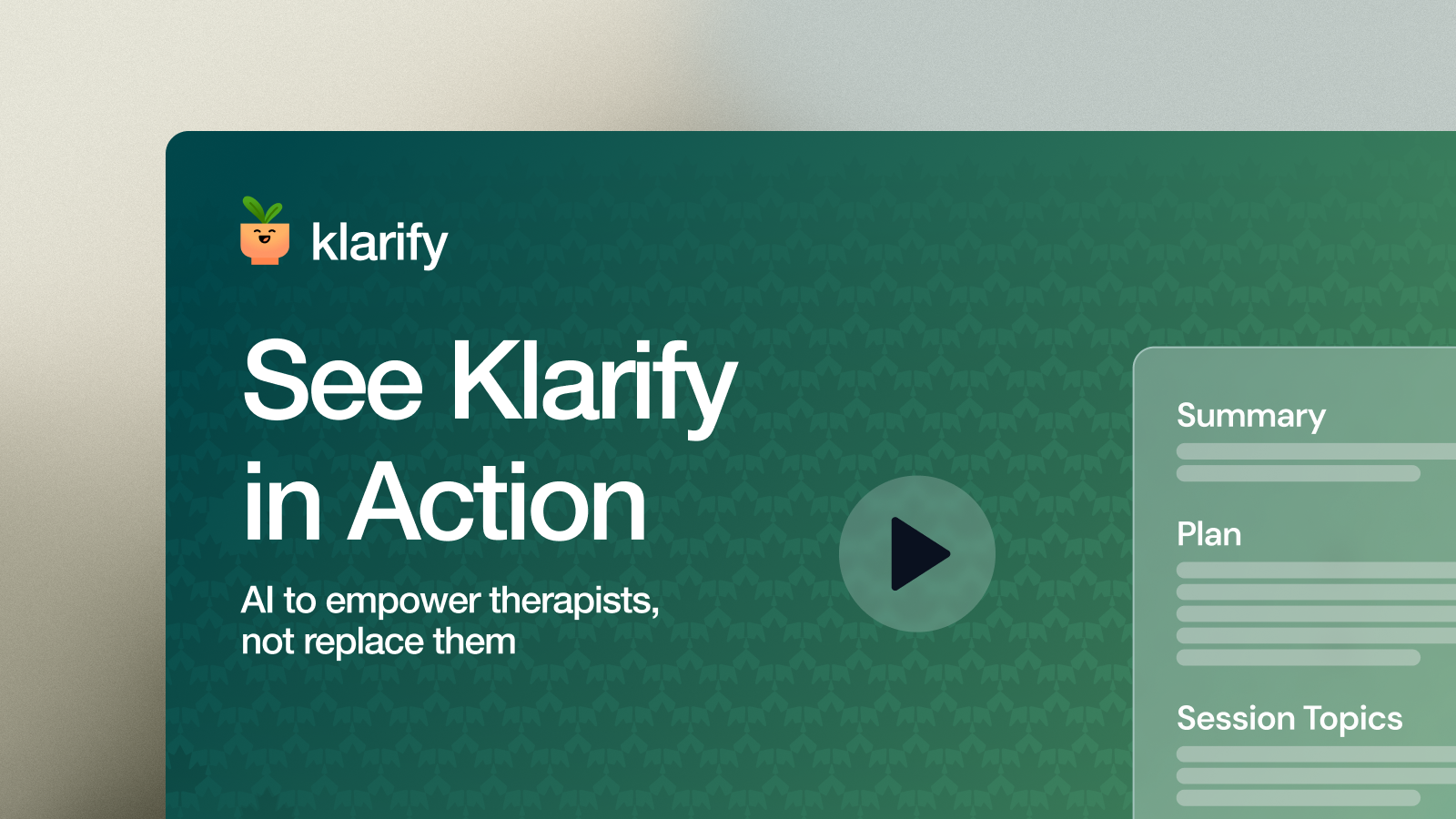
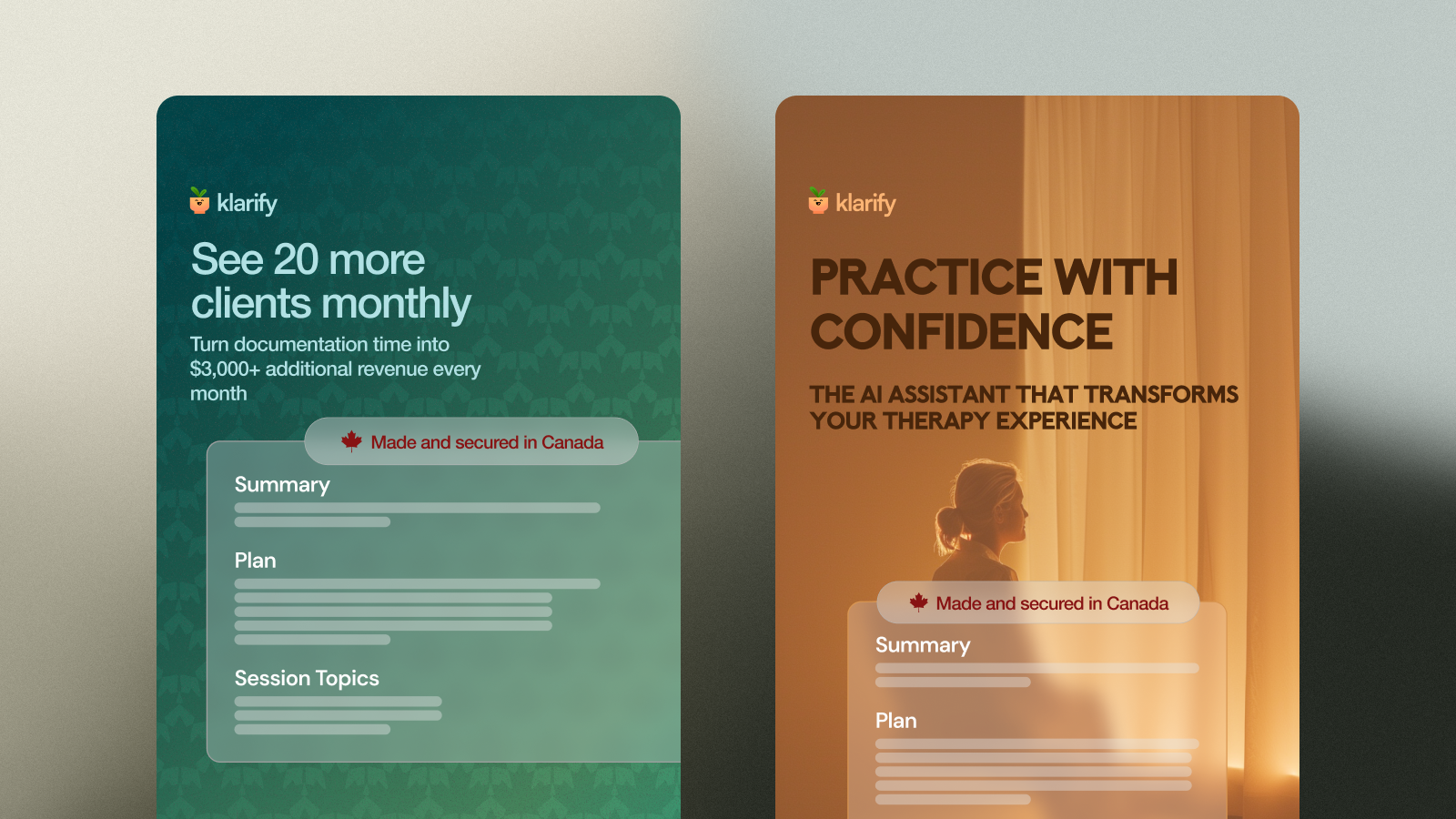
LinkedIn banners and promotional graphics.
YouTube video thumbnails and ad campaigns.
Multi-platform ads designed across screen sizes.
During this work, Klarify's color guidelines and design language began to converge, and thus every asset followed a consistent structure that became the foundation for all future brand work.
Conference Materials
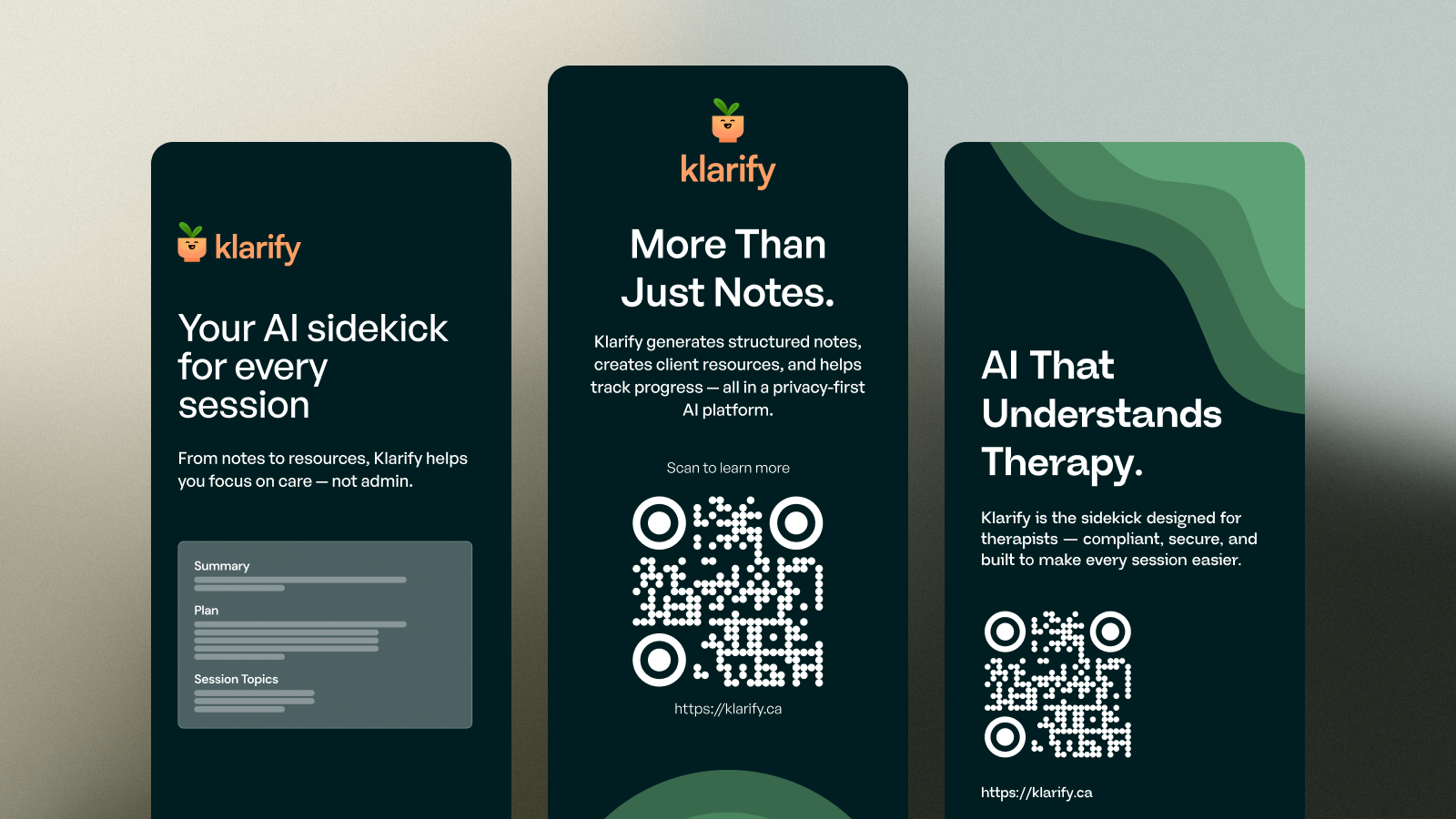
When Klarify sponsored one of North America's largest therapy conferences, I created a full suite of promotional designs including booth materials, handouts, and digital assets.
Platform Design
As the sole designer, I contributed to every feature and flow in the Klarify platform. Working primarily autonomously but in constant conversation with the founders and engineering team, I prioritized simplification. I focused on stripping away complexity in order to create intuitive experiences for therapists at all levels of tech proficiency.
Design Philosophy: Less is More
Each feature went through multiple iterations, progressively refining the experience month over month. Below are key projects that showcase the breadth of my work. (Reach out if you'd like to see more -- I'm happy to walk through the full scope.)
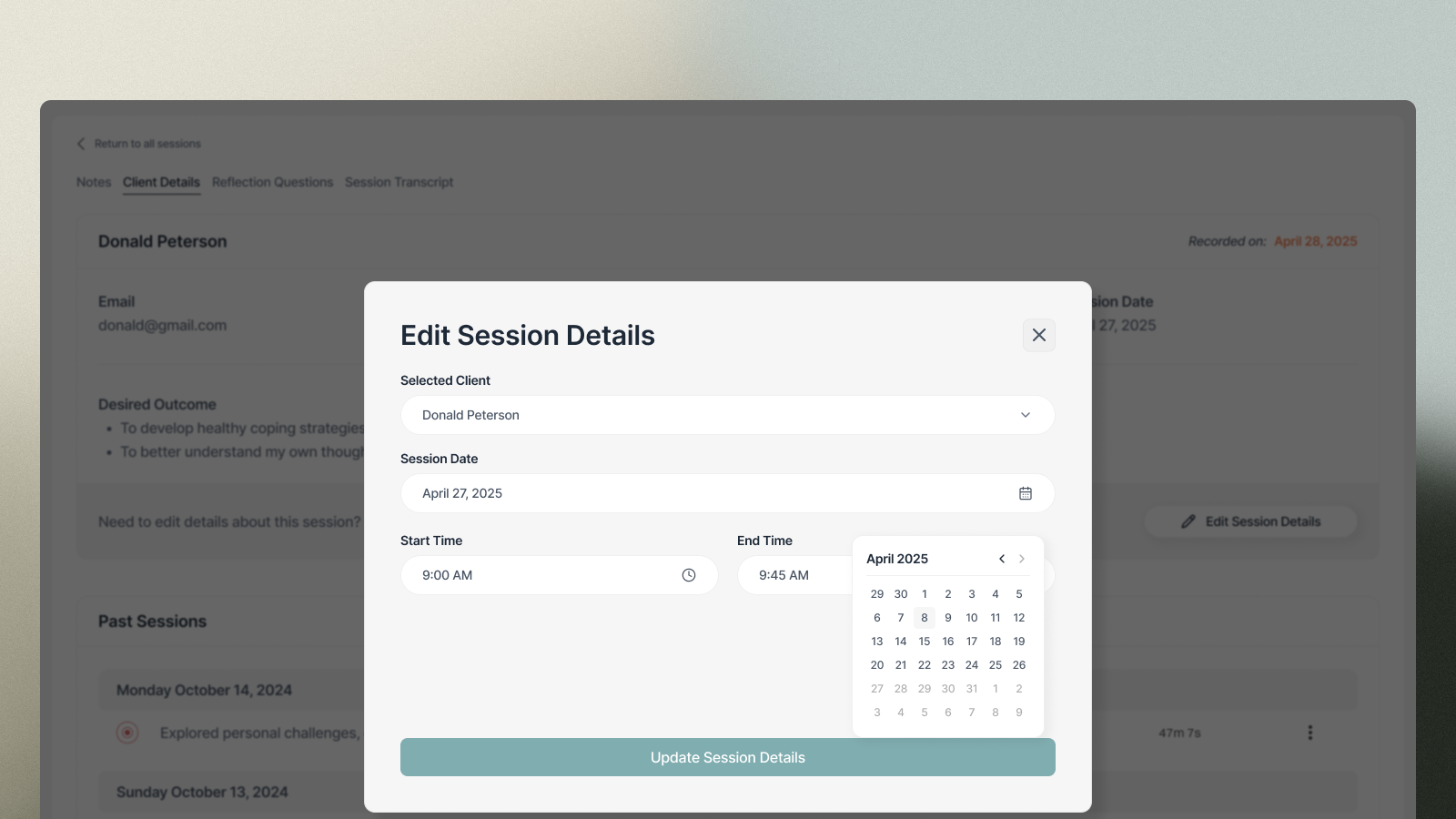
Overview Page
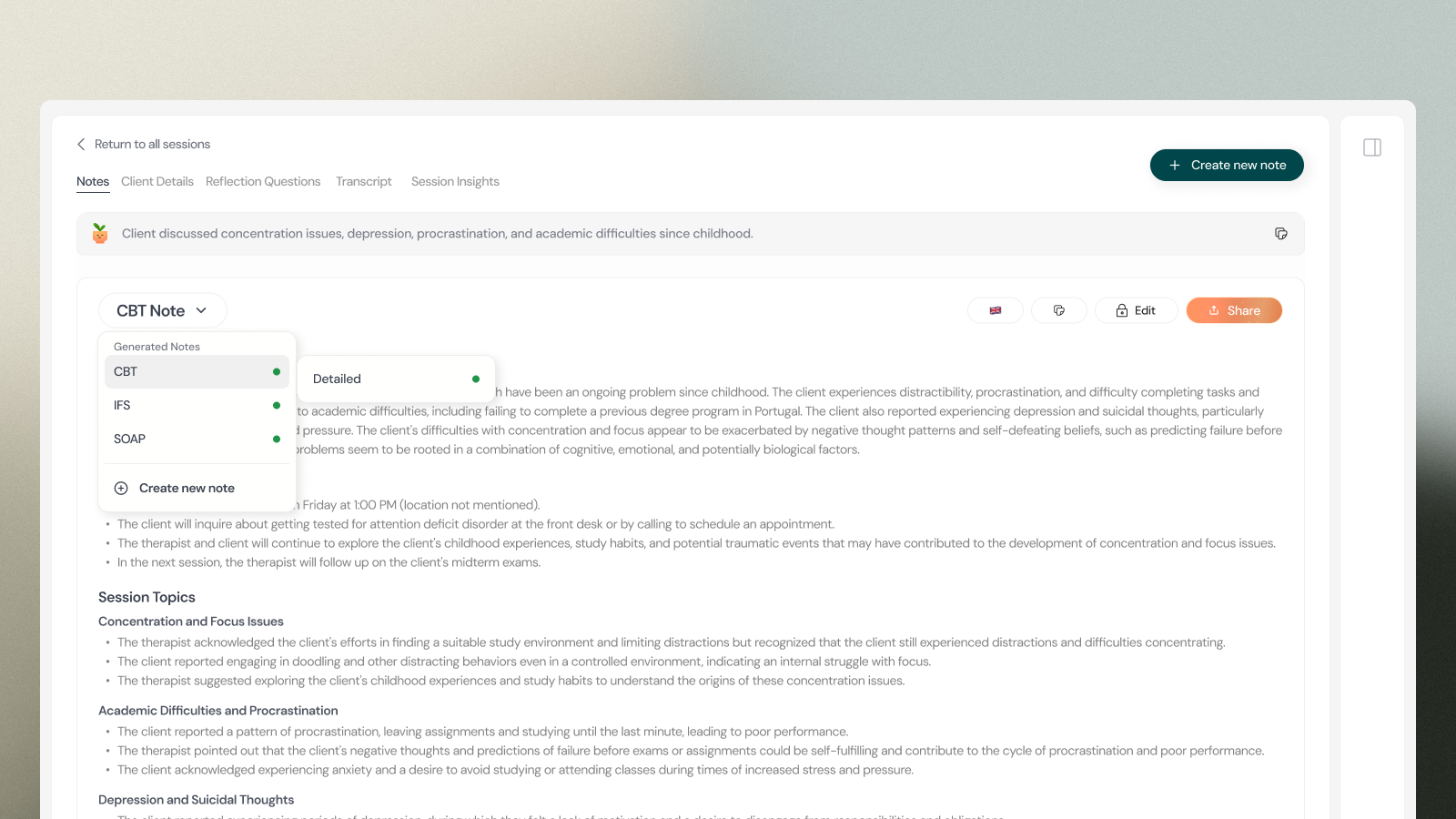
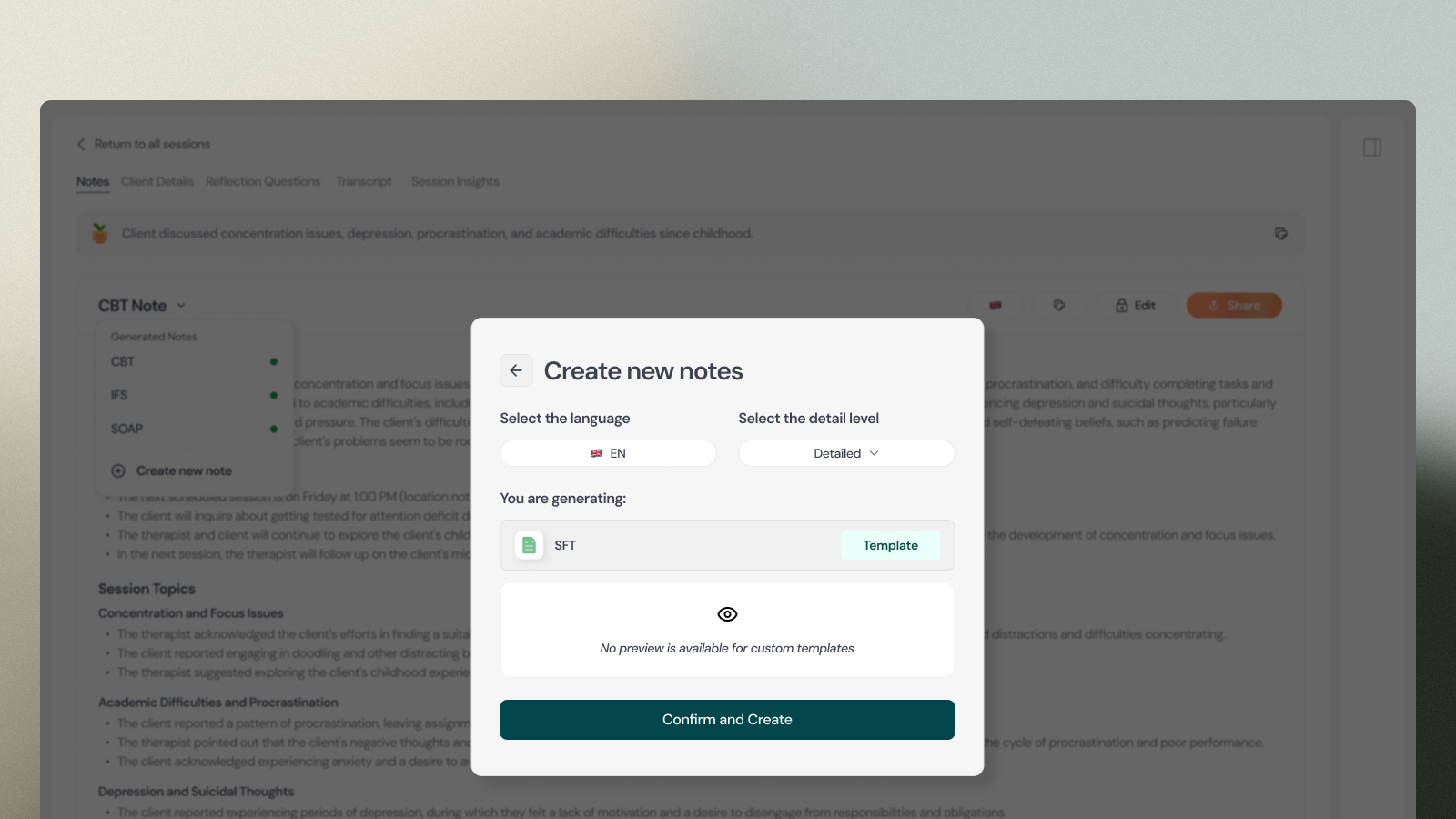
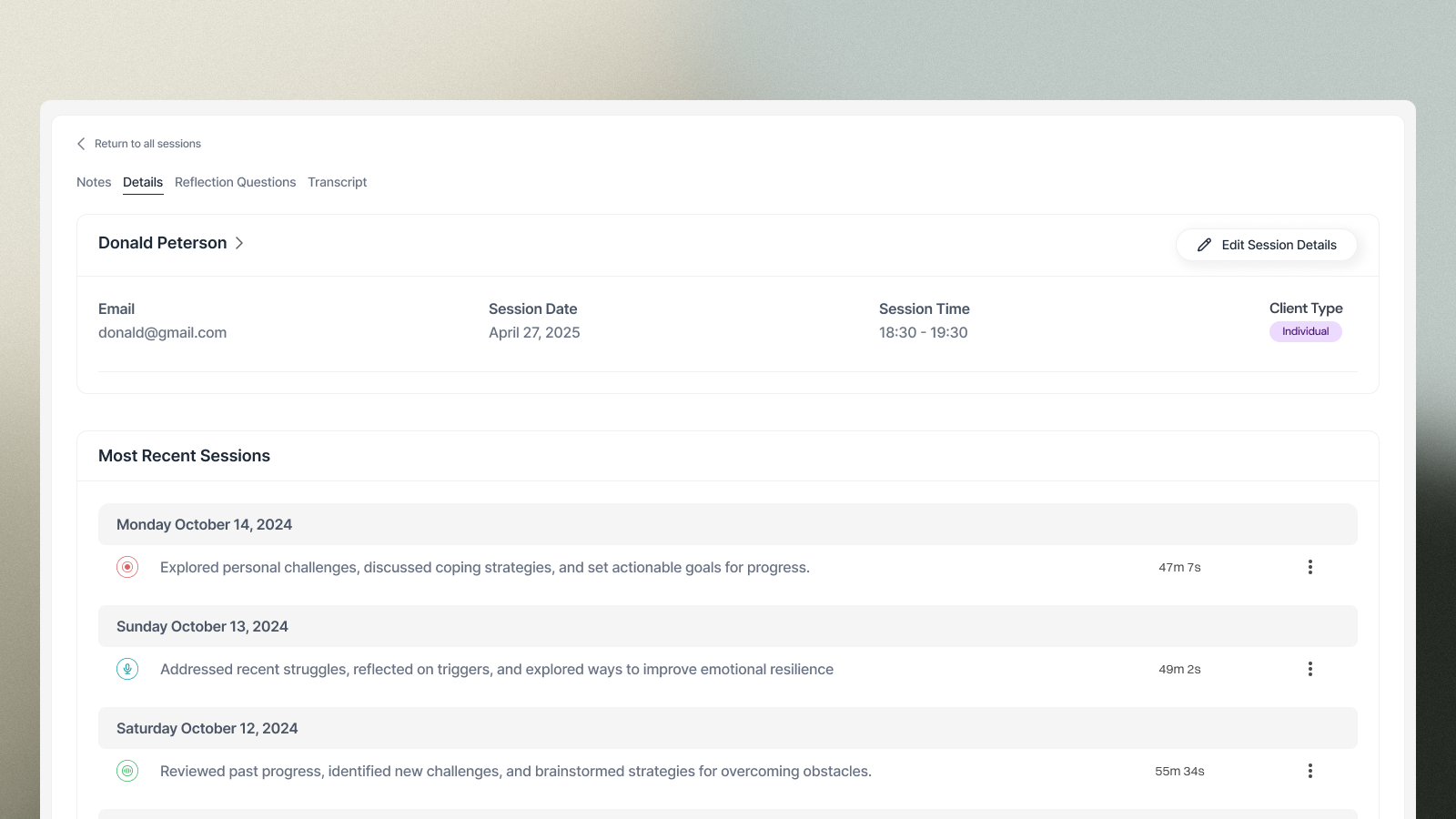
The Overview Page acted as the command center for each therapy session. Therapists could access notes, client details, reflection questions, transcripts, and AI-generated insights, all while interacting with Bloomy, Klarify's built-in AI assistant.
Key actions included:
Creating and editing multiple note types and formats.
Sharing notes with clients or colleagues.
Asking Bloomy questions directly within the session context.
The biggest challenge was attempting to organize dense information hierarchies, while maintaining a clean, scannable interface that didn't overwhelm users.
Record Page
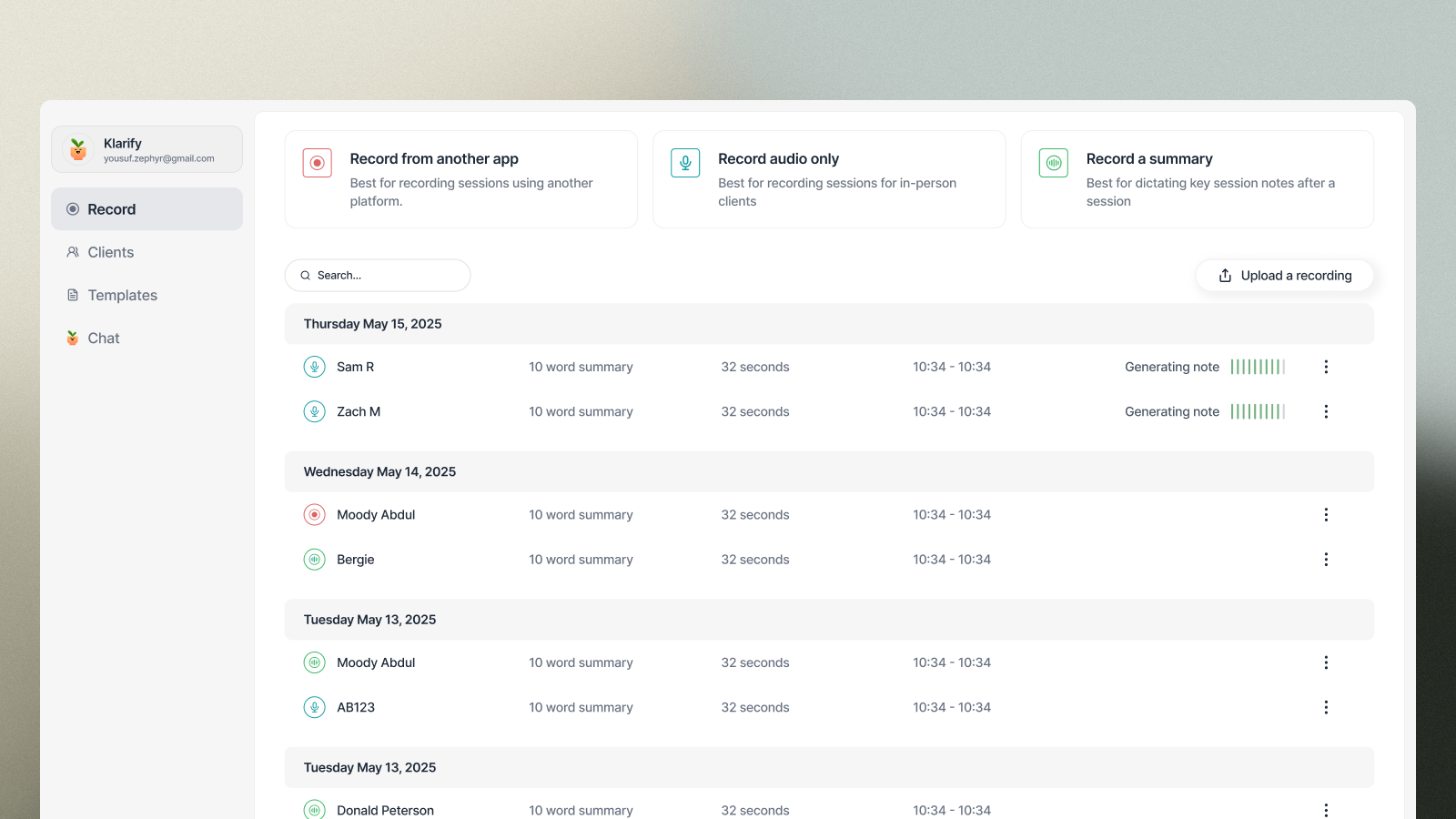
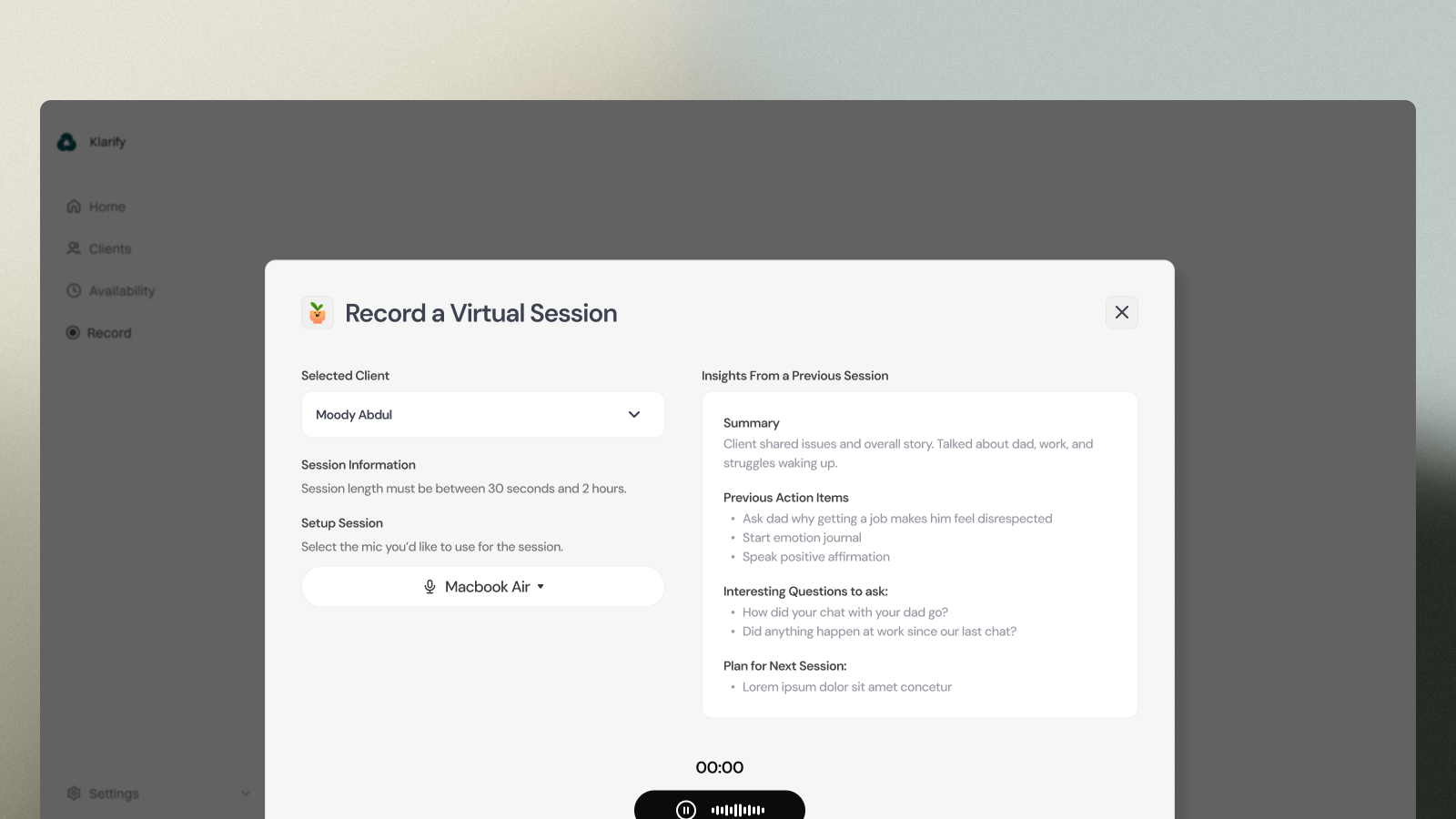
The Record Page served as the app's homepage. Since recording sessions was therapists' most frequent action, the design needed to balance two competing needs:
Displaying information: The page needed to show past sessions and relevant history
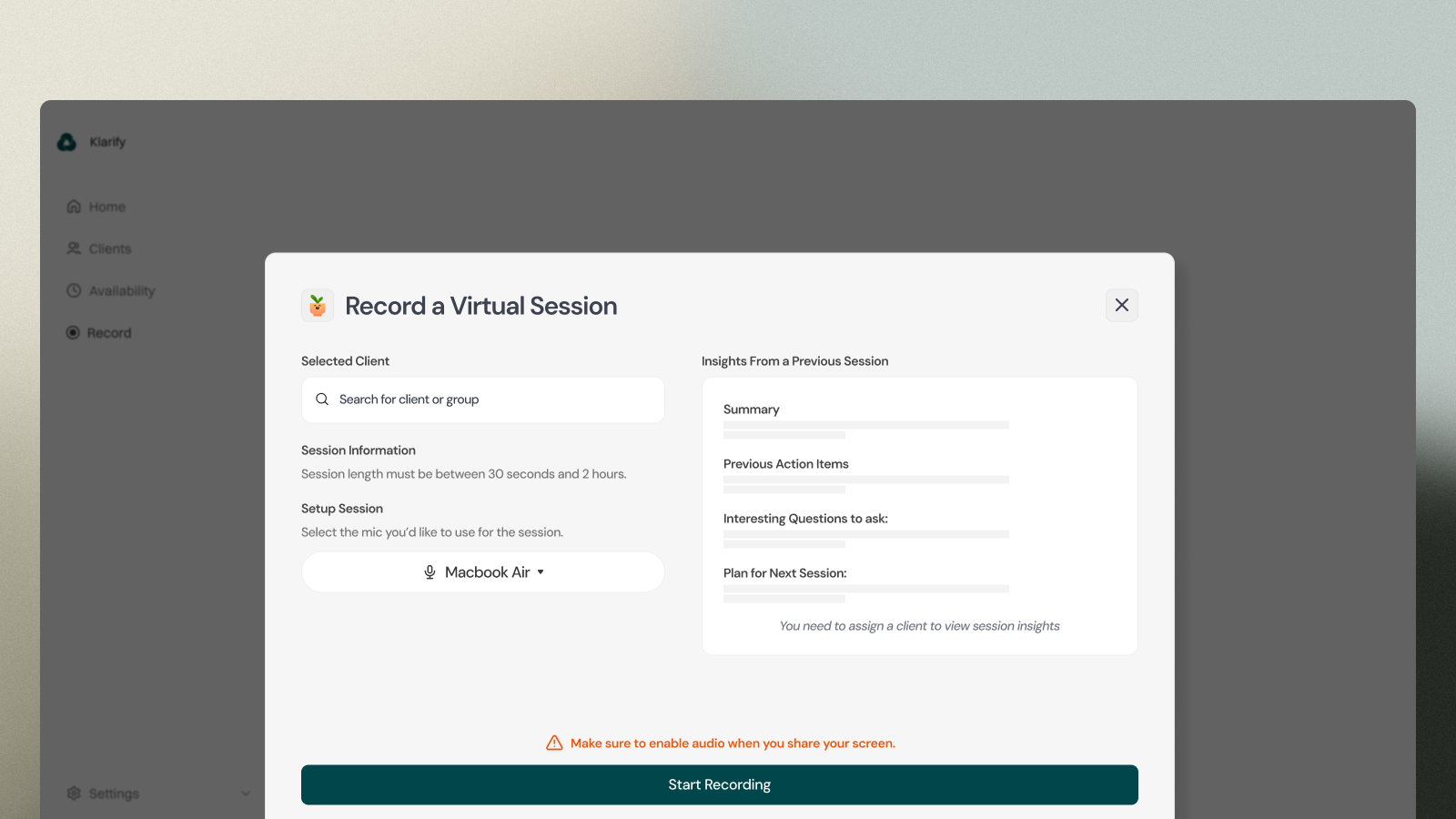
Enabling action: It also needed to be effortless to allow therapists to start recording via multiple methods
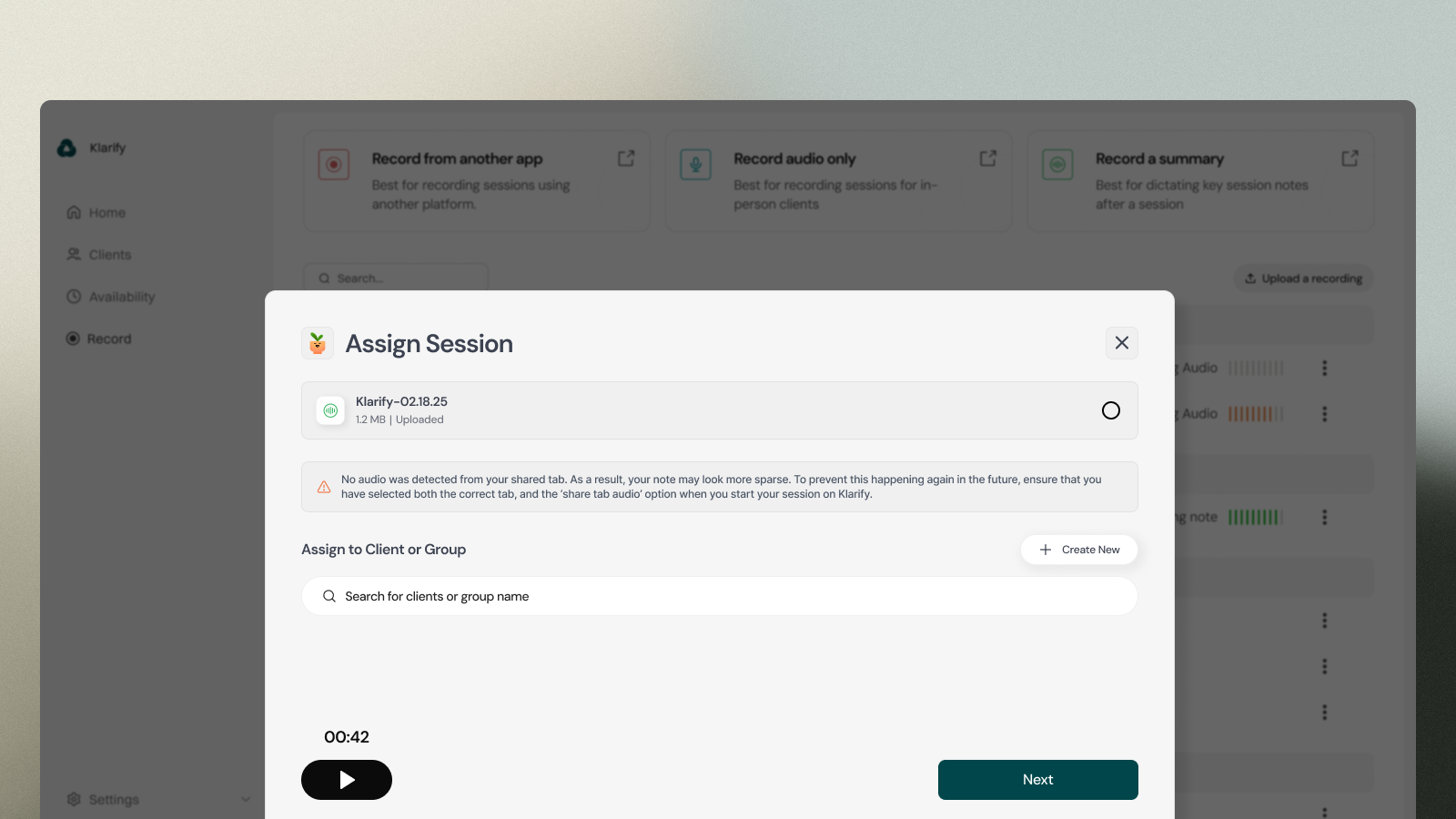
The recording flow itself was the most critical part of the entire platform. It went through numerous iterations to reduce friction and handle edge cases like interrupted recordings, background audio, and session metadata capture.
Settings & Billing
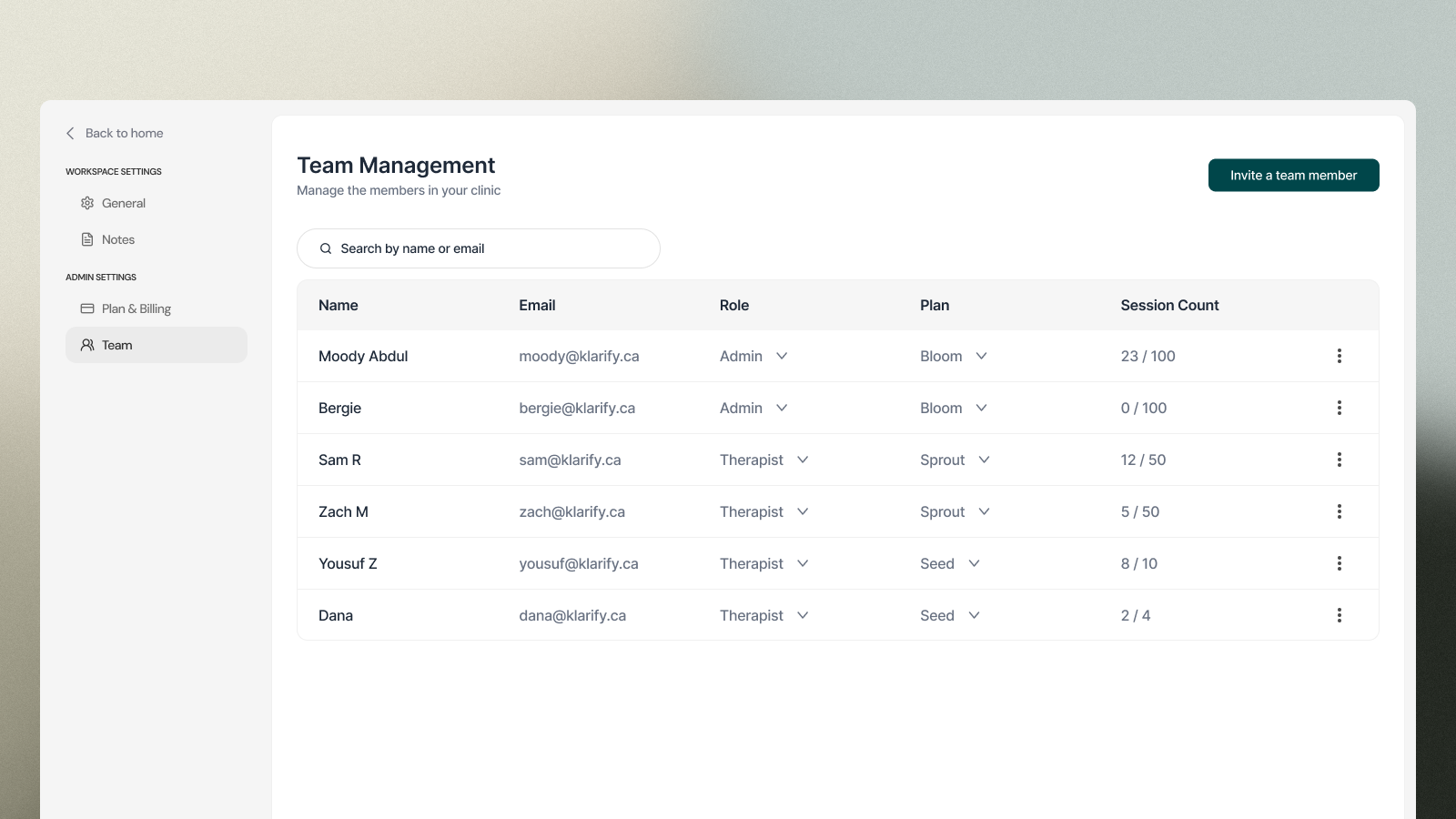
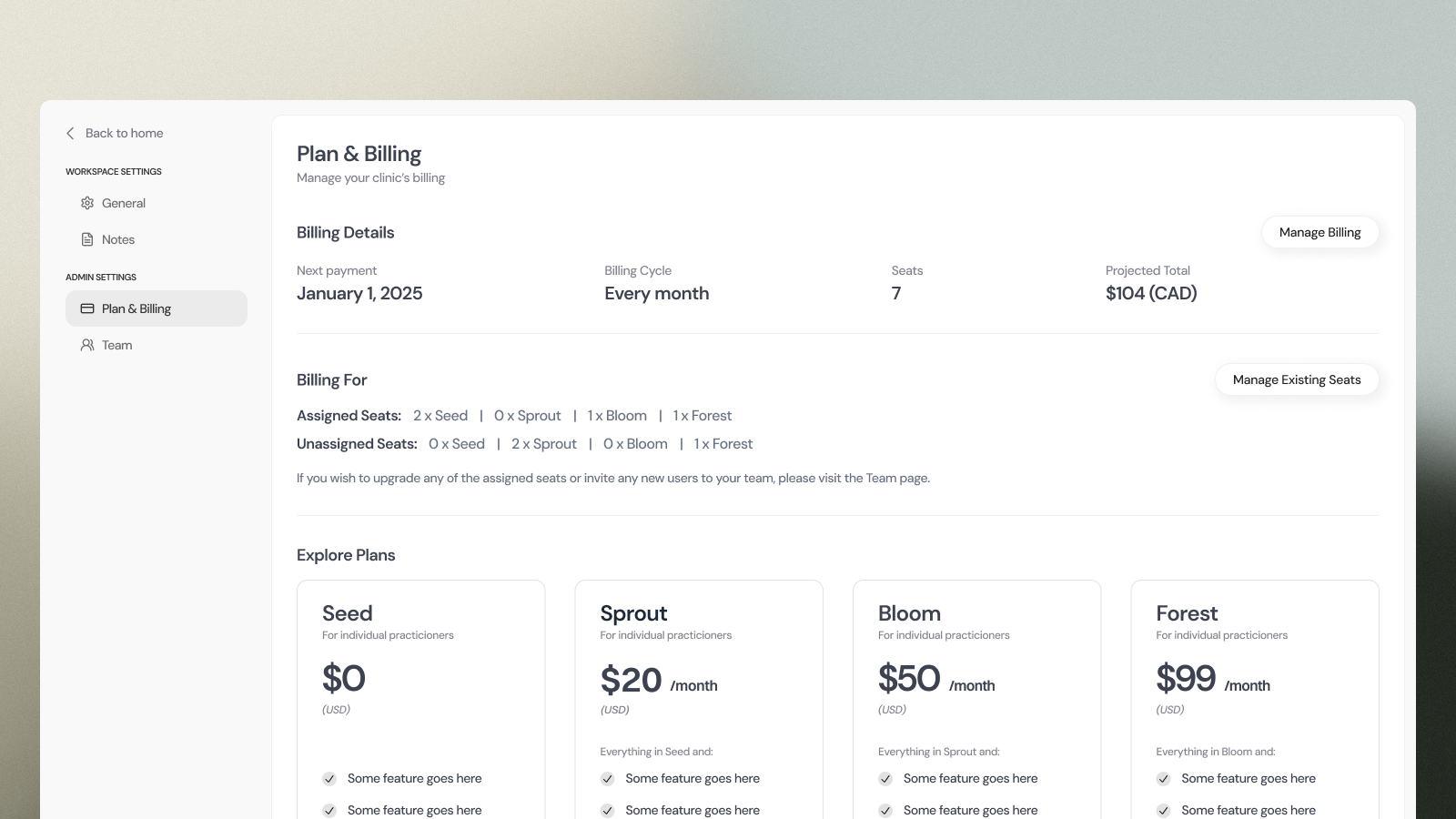
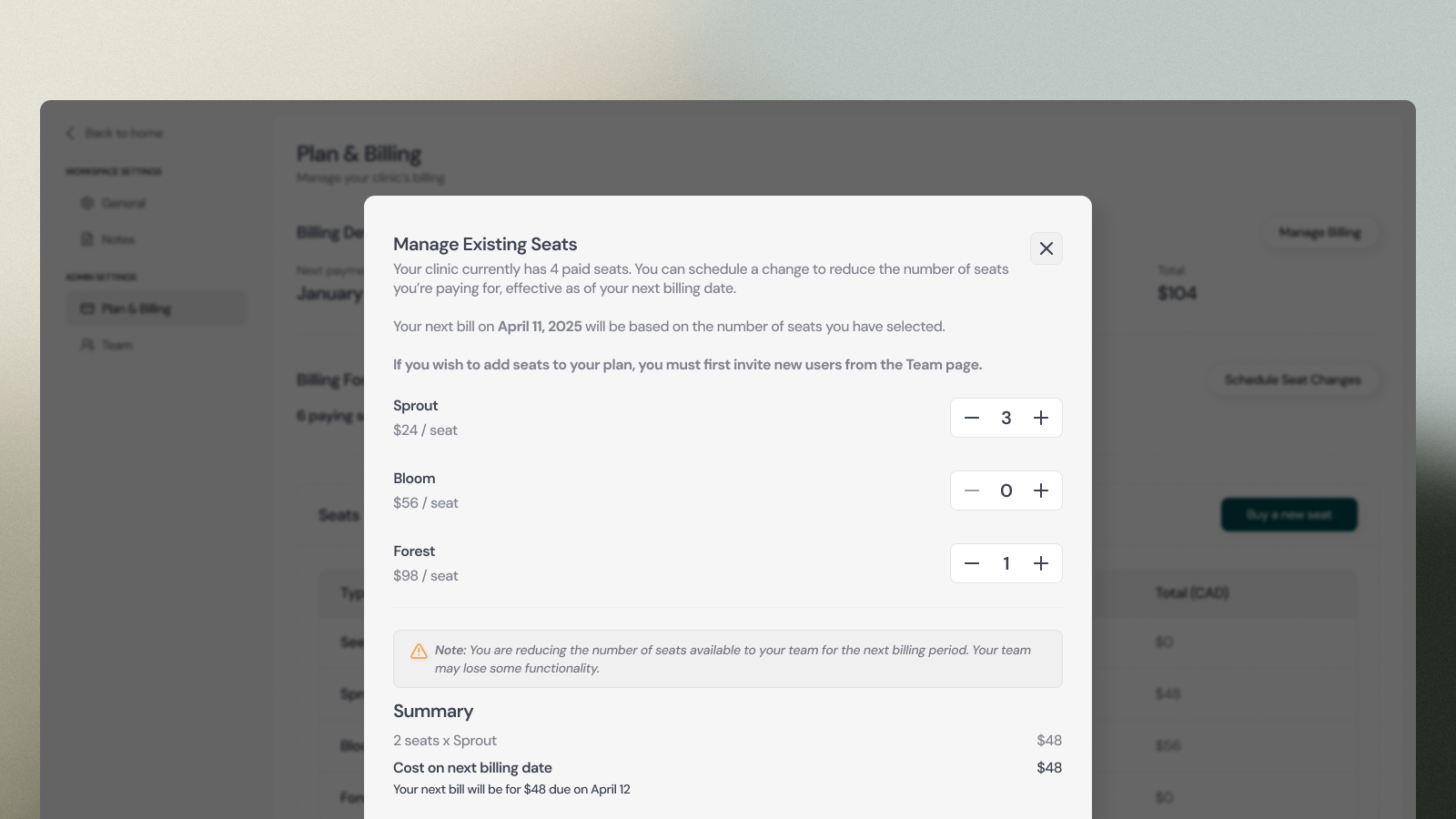
What began as a simple payment settings page evolved into a complex multi-role system once we introduced clinic support.
The Complexity
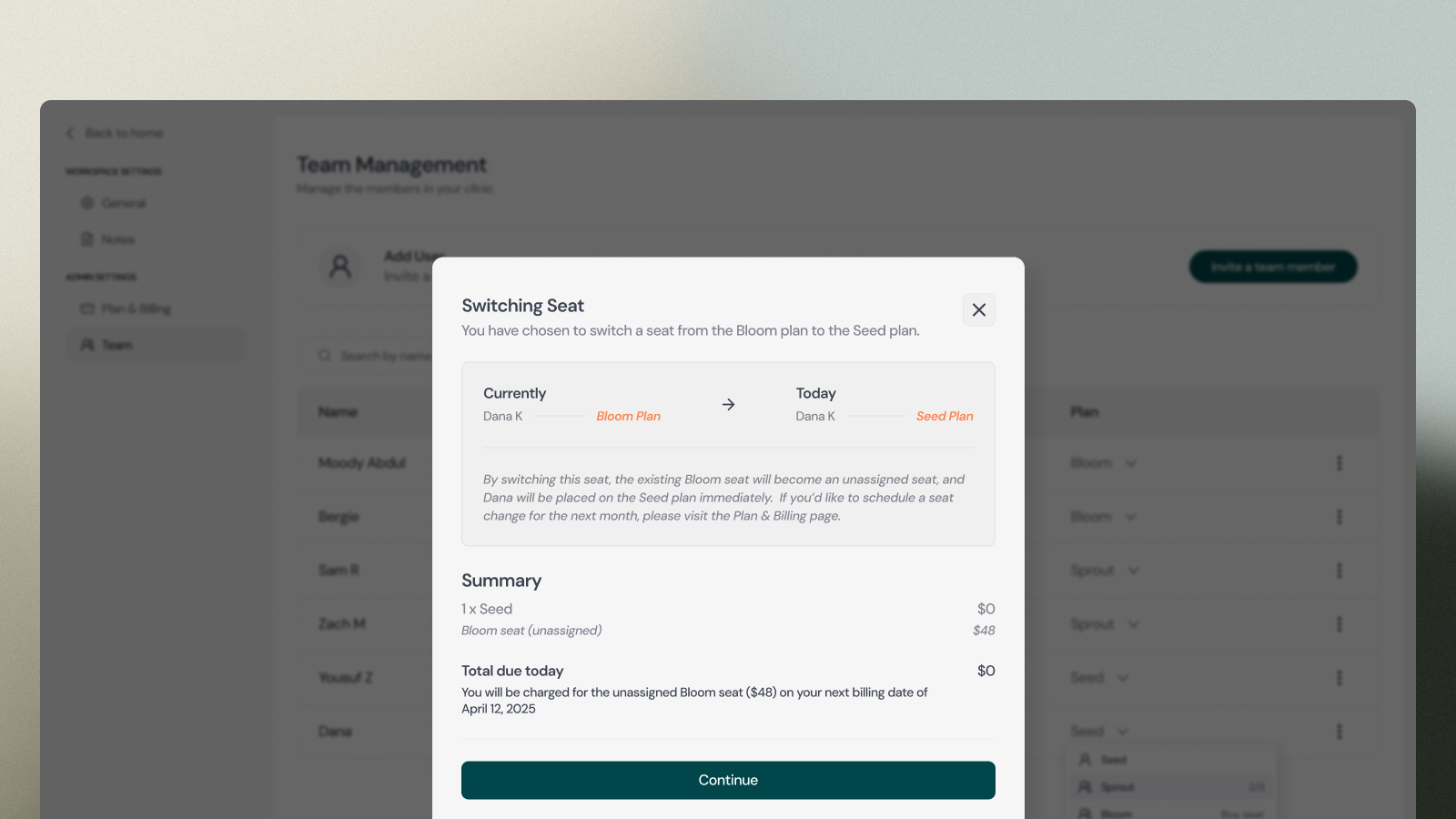
User roles began to emerge; individual therapists, clinic administrators and billing managers, each one with different permissions and capabilities. Administrators needed to:
Purchase and manage seat licenses.
Reassign seats to different users.
Update billing for specific seats.
View clinic-wide usage and analytics.
The flow went through countless iterations, guided by user research and real-world requirements from clinic partners. The final design balanced power-user functionality with clarity for less technical users.
KlarifyGPT
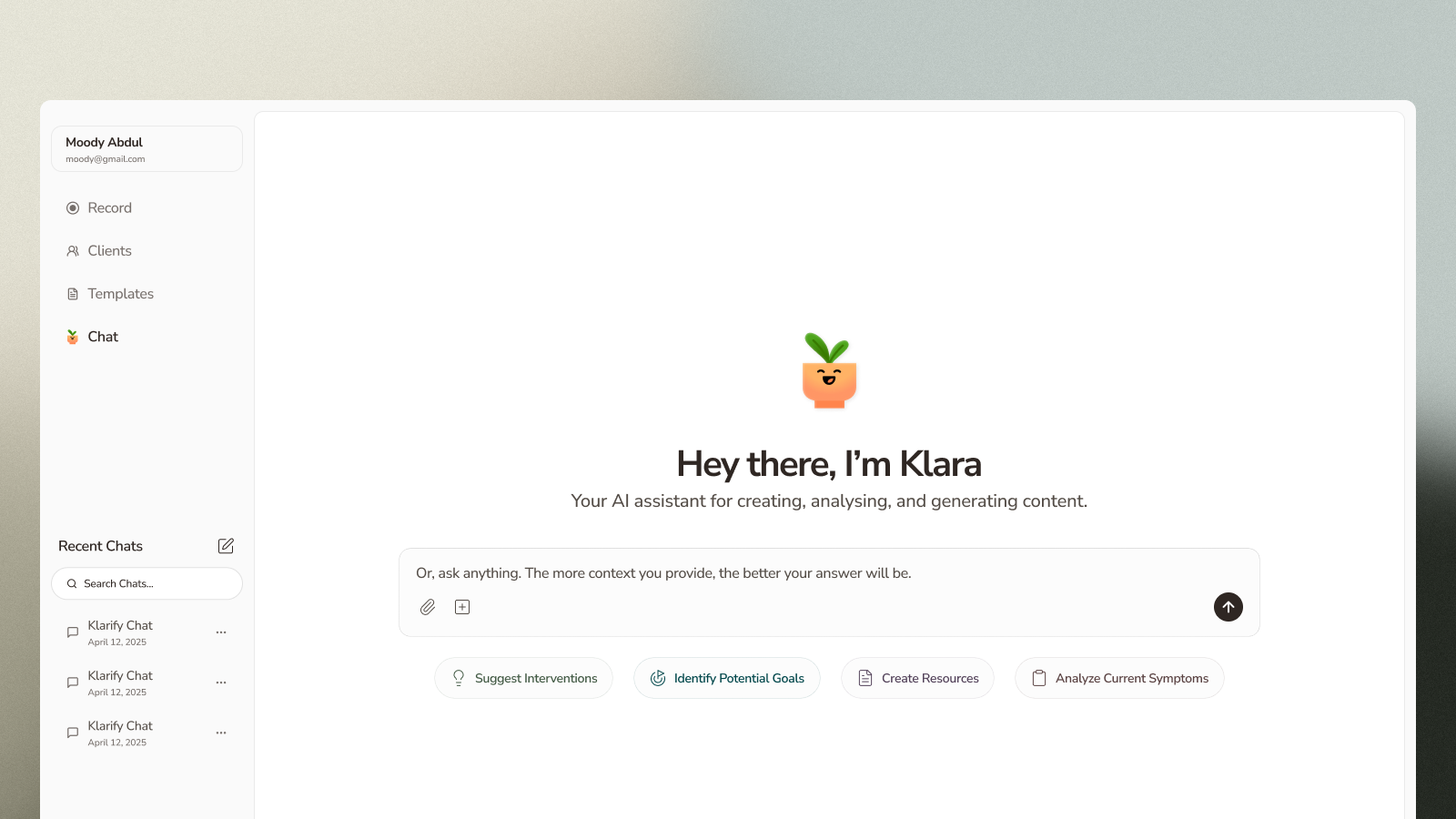
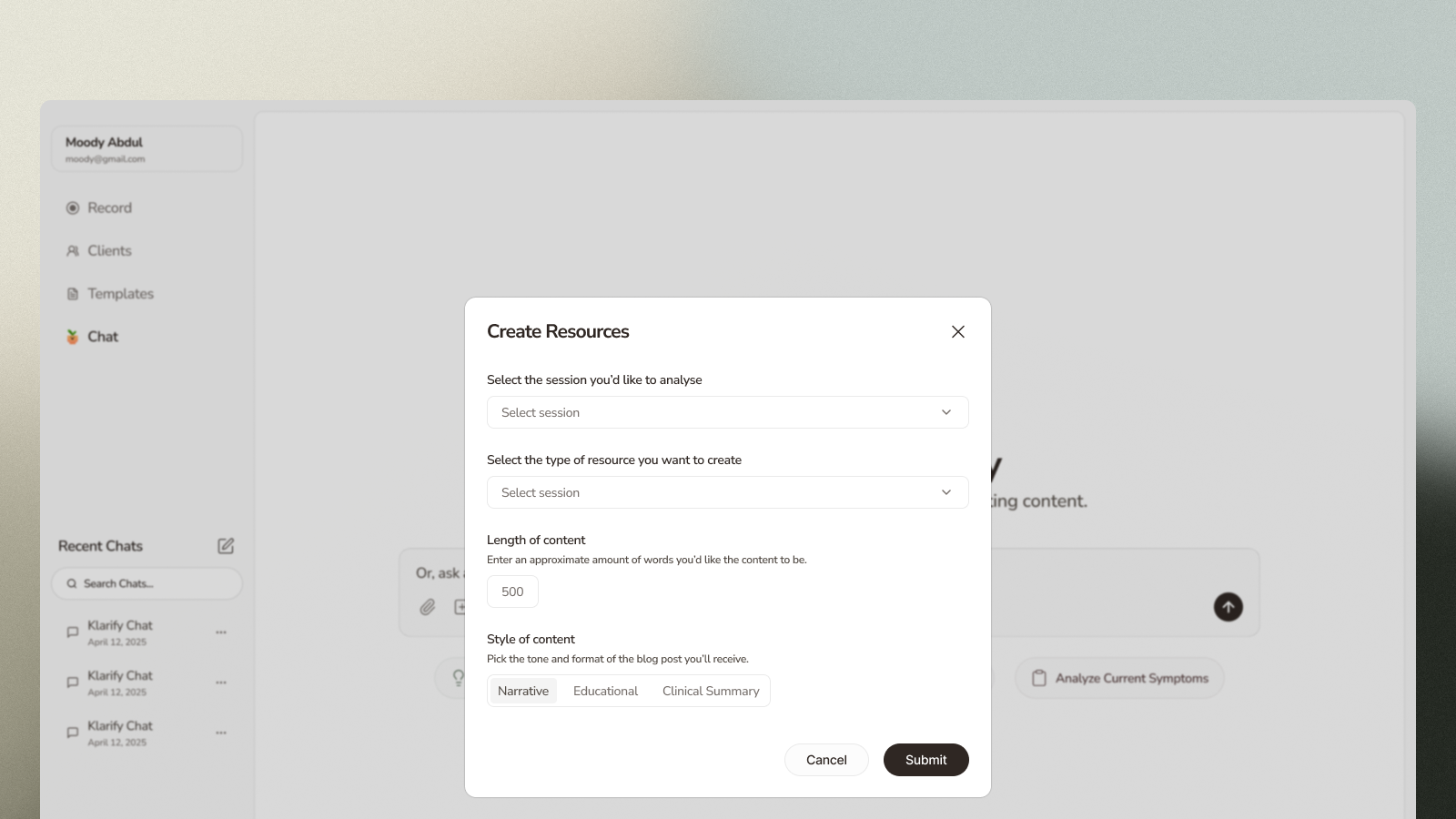
Toward the end of my time at Klarify, I designed KlarifyGPT, the in-house AI assistant. This presented an opportunity to design for conversational AI while being mindful of our audience, including elderly therapists who weren't tech-savvy.
Design Approach
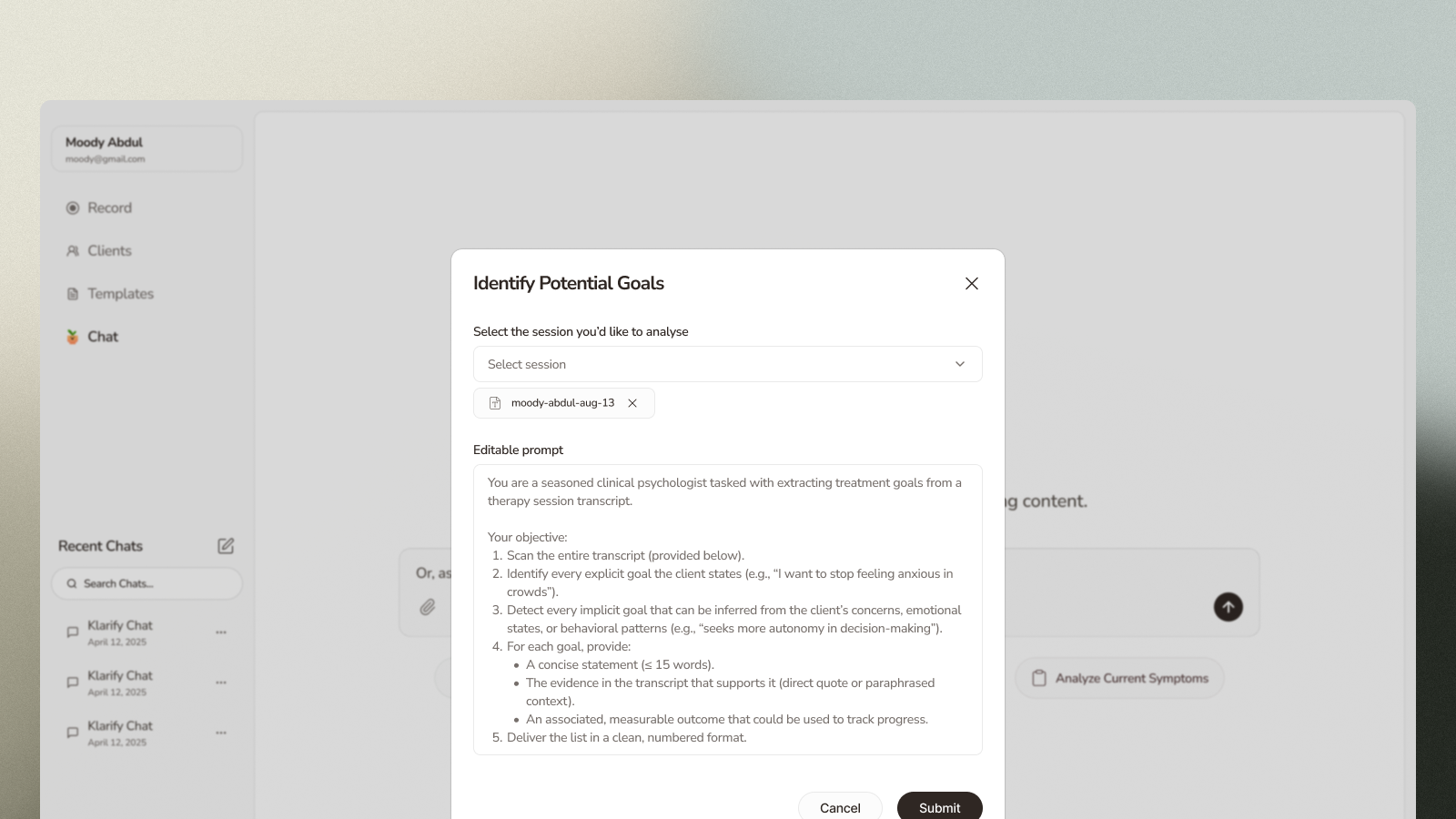
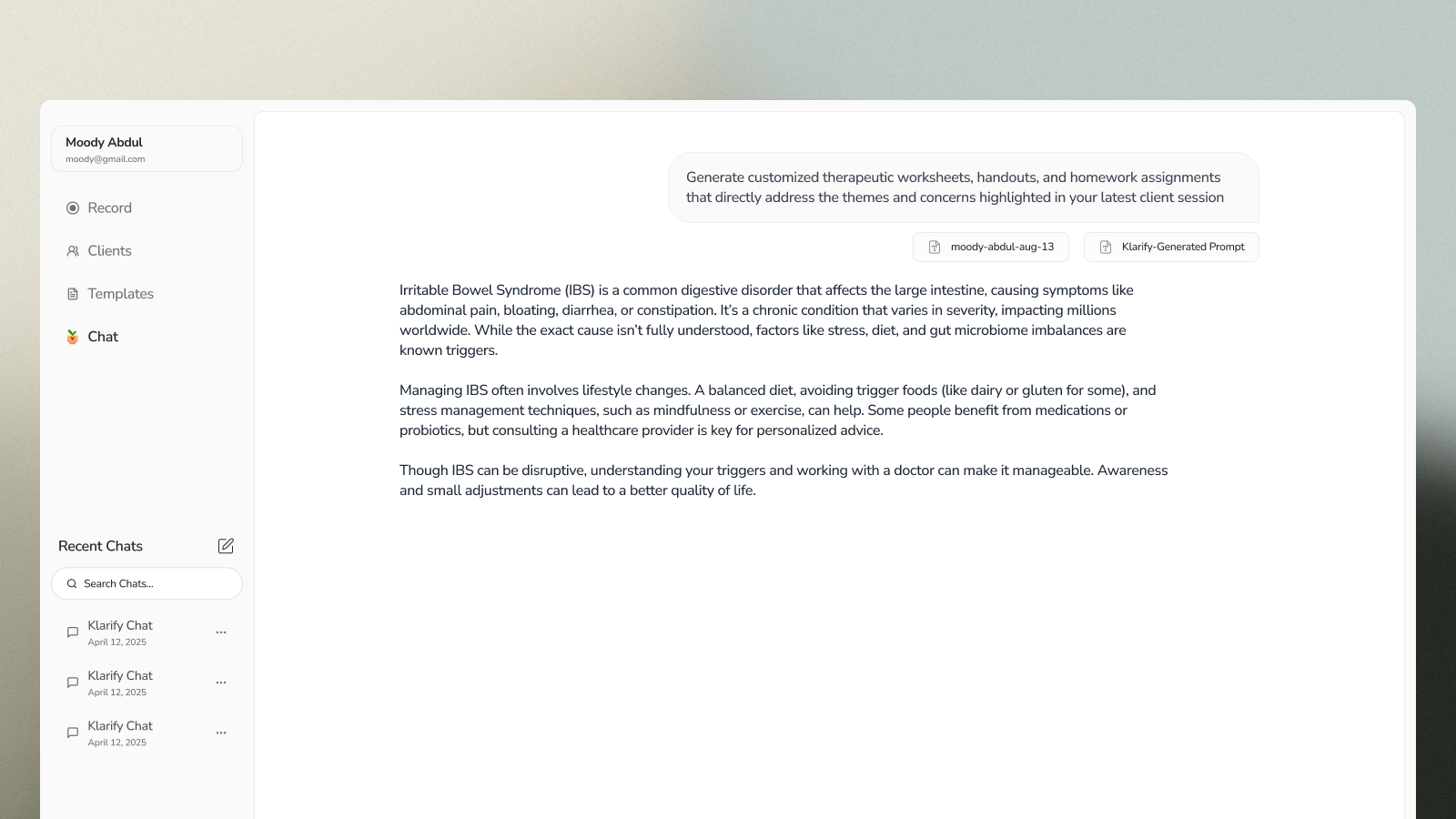
To tackle this, I opted for a lightweight interface with:
Clear, succinct explanations of AI capabilities.
"Quick Actions" for common tasks to save time.
Transparent AI responses with visible sourcing.
Familiar patterns that didn't require learning new interaction models.
The goal was to make AI feel helpful rather than intimidating -- a tool that therapists could use to enhance their practice without adding cognitive load.
Design System
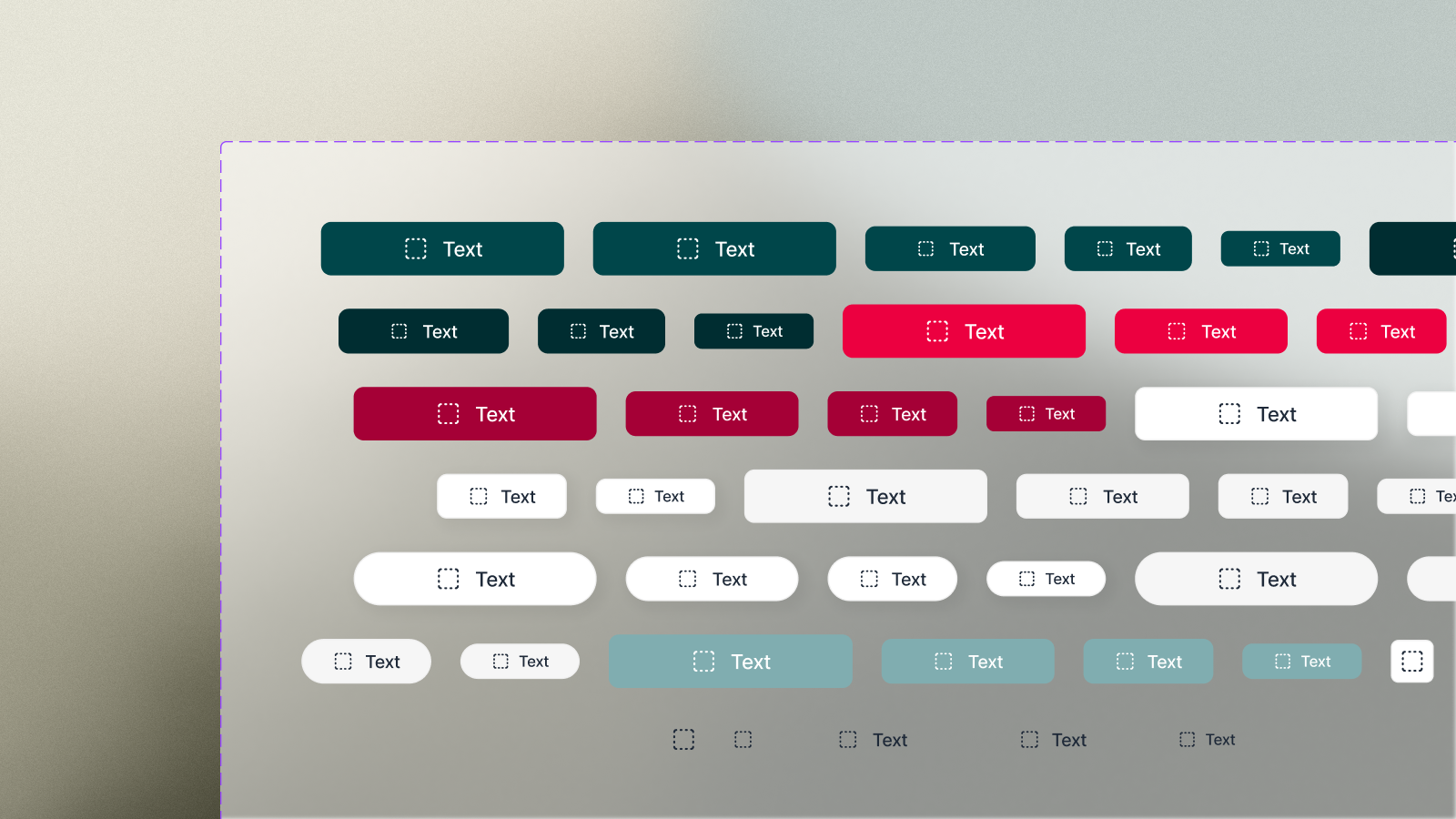
Throughout all of this work, I built a comprehensive design system that unified the platform's visual language. Components, patterns, and guidelines scaled across all features, ensuring consistency as the product grew and making handoff to engineering seamless.